Your Spare Parts Revenue Is Going to Amazon
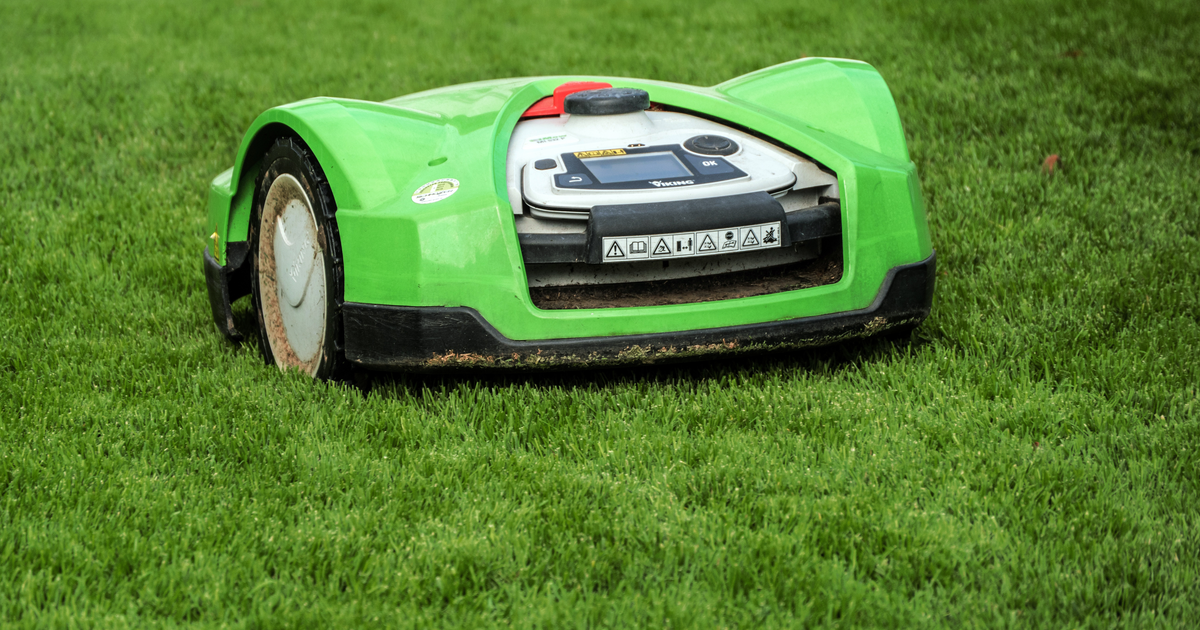
 A robotic mower mid-job: one half neat, one half still to cut. This is the machine your manufacturer built. But when that blade wears out, who sells the replacement? Photo: Wikimedia Commons, CC BY 2.0.

A premium robotic mower, a garden tractor, a high-end cylinder mower: these are serious machines. Complex engineering, dozens of moving parts, designed to last a decade or more.
The autonomous mowers are the most striking example. A robotic mower runs GPS navigation, carries a lithium-ion battery with a finite cycle life, and connects to an app for scheduling. Yet when the blade disc needs replacing or the battery degrades after a few years, the owner's first instinct is to Google the part number. They land on Amazon. They buy from a third-party seller.
The same thing happens with every ride-on mower and garden tractor in the country. They arrive with a paper warranty card in the box. The card goes in a kitchen drawer. The drawer fills up. Years later, when a blade belt snaps or a battery dies, the owner has no idea where the card is, which belt fits their model year, or whether they're still under warranty.
The manufacturer never hears from them. The revenue leaks. The relationship never begins.
The scale of the problem
The UK outdoor power equipment market runs to billions of pounds a year. Ride-on mowers and garden tractors sit at the premium end, often costing several thousand pounds per unit, with owners expecting many years of service.
The autonomous mower segment is growing fast. Connected, GPS-guided machines from a range of brands are appearing in domestic gardens. These aren't simple appliances: they carry lithium-ion batteries that fall within the scope of the EU Battery Regulation, software that needs updating, and blade systems that need periodic replacement.
Every one of these machines needs replacement parts during its life. Blades, belts, filters, batteries, deck components, charging station parts, boundary wire: often dozens of SKUs per model. The aftermarket can represent a meaningful share of the value a customer spends over a machine's lifetime.
But manufacturers capture almost none of it directly.
Where the parts revenue goes
Search for any garden tractor spare part and you'll see the problem immediately:
- Amazon UK: many listings for popular brands, sold by third-party sellers
- Independent parts retailers: dedicated sections for every major brand
- eBay: both OEM and pattern parts, often cheaper than the dealer
- Specialist sites: capturing search traffic the manufacturer should own
The manufacturer designed the part. They know the specifications. They have the supply chain. But because there's no digital channel from the product to the owner, the owner's first instinct is to search, and the search results belong to third parties. This is a foundational problem in manufacturing, and manufacturers lose aftermarket revenue to third-party repair as a result.
Why it happens: the post-purchase blind spot
Garden tractor manufacturers sell through dealer networks. The dealer handles the sale, arranges delivery, and processes the warranty card if the customer remembers to fill it in. After that:
- The manufacturer doesn't know who bought the tractor
- The owner has no direct channel to the manufacturer
- When a part is needed, the owner starts from scratch, searching by model number and hoping they've identified the right variant
- Warranty claims require a phone call, proof of purchase, and often a dealer visit
This isn't a technology failure. It's a channel architecture problem. The manufacturer has no per-unit digital connection to the product after it leaves the factory. A large share of physical products are never registered at all, creating a systematic visibility gap that leads to disconnected relationships and lost revenue opportunities.
The ownership transfer gap
Garden tractors and autonomous mowers both change hands. They're sold on second-hand marketplaces when someone moves house. They're inherited when a property changes hands. They're traded at specialist dealers.
 An autonomous mower working independently, camera-guided, with no boundary wire. When it changes hands with the property, the new owner inherits a machine with no warranty record, no parts history, and no manufacturer relationship. Photo: Wikimedia Commons, CC BY-SA 4.0.

When a garden tractor changes owners, the new buyer gets the machine and nothing else. No warranty transfer. No service history. No way to identify which specific parts fit without calling a dealer or counting belt teeth. Ownership transfer with preserved warranty is where digital identity creates entirely new business models.
For autonomous mowers, the problem is even worse. A second-hand robotic mower typically needs the previous owner to factory-reset and de-register the device. If they don't, the new owner can't connect it to their app, can't update the firmware, and has no access to the boundary map or mowing schedule. The manufacturer has no idea the product changed hands, and no way to offer the new owner blades, a replacement battery, or an extended warranty.
The problem becomes especially acute when a brand or model is discontinued. Every such machine still in a garden is effectively an orphaned product: still needing parts, still needing service, but with no production line behind it. The aftermarket relationship is all that remains, and it's often entirely unmanaged.
Why autonomous mowers make this urgent
Autonomous mowers aren't just a niche trend. They're becoming a common choice for medium to large gardens, and they're the perfect illustration of why every outdoor power product needs a persistent digital identity.
Consider what a robotic mower actually is:
- A connected device: with firmware updates, app pairing, GPS mapping, and scheduling
- A battery-powered machine: with lithium-ion cells that degrade over time and that fall within the scope of the EU Battery Regulation
- A blade system: requiring regular replacement
- A charging station: with its own wear parts and power supply
- A boundary system: wire, connectors, and signal transmitters that corrode and break
Each of these represents recurring aftermarket revenue. Each one is currently captured by Amazon, eBay, or independent parts retailers. The manufacturer designed every component but has no channel to sell replacements directly to the owner.
A QR code on the mower's chassis changes this entirely. Scan, see exactly which blade kit fits this model and firmware version, order direct. The manufacturer captures the revenue. The owner gets the right part first time. The warranty stays intact.
What a per-unit digital identity changes
Imagine a different scenario. A garden tractor ships with a QR code on the chassis, laser-etched or on a durable plate near the serial number.
At purchase: the owner scans the code, registers in seconds, and the warranty record is created automatically. No paper card. No postage. No lost receipts. This is the premise behind modern digital warranty card UX.
When a part is needed: the owner scans the same code and sees the exact compatible parts for their specific model, year, and configuration. Not a generic catalogue, but the precise belt, blade, or battery that fits this machine. One tap to order direct from the manufacturer or an authorised dealer.
When the tractor changes hands: the new owner scans the code and registers. They inherit the service history, see what parts have been replaced, and know their warranty status. The manufacturer gains a new customer they'd never have found otherwise. Ownership transfer is where digital identity creates entirely new business models.
When a recall is needed: the manufacturer can reach every affected owner directly. Not through dealers, not through a website notice that nobody reads, but a direct notification to the person who owns the product.
The commercial case
The contrast is straightforward:
| Metric | Without digital identity | With per-unit QR |
|---|---|---|
| Owner registration | Low (paper card) | Higher (digital scan) |
| Spare parts channel | Amazon, eBay, third parties | Direct or authorised dealer |
| Warranty claim process | Phone + receipt + dealer visit | Scan + instant verification |
| Ownership transfers tracked | None | Every scan is a new registration |
| Recall reach | Website notice + hope | Direct notification to owner |
| Aftermarket revenue per unit | Leaked to third parties | Captured over the product's life |
For a manufacturer with meaningful annual volume at a high unit price, the aftermarket revenue over a long product life can be a significant opportunity, provided there's a channel to capture it.
The regulatory tailwind
The EU's Right to Repair Directive is part of a wider push toward repairability and product transparency. The Ecodesign for Sustainable Products Regulation (ESPR) is expanding Digital Product Passport requirements, a category that over time can include powered garden equipment.
UK manufacturers exporting to the EU will need documented spare parts availability, repair access, and product data per unit. The infrastructure to support this isn't a spreadsheet. It's a per-unit digital identity that tracks the product through its lifecycle.
Manufacturers who build this now can get two things: progress toward compliance readiness as a byproduct, and a commercial aftermarket channel that can pay for itself.
What this looks like in practice
Consider a hypothetical UK garden tractor manufacturer that adopts per-unit QR codes:
- Week 1: QR codes added to the production line, so each tractor gets a unique digital identity at manufacture
- Week 2: First customers scan and register, warranty activates, parts catalogue linked
- Month 3: Registration shifts from paper cards toward digital scans, so the manufacturer now knows who owns what
- Month 6: First direct parts orders arrive through the QR channel, revenue previously going to third parties
- Year 1: Ownership transfers begin appearing, with second-hand buyers registering, accessing parts, and discovering warranty status
- Year 2: Aftermarket revenue per registered unit grows as more owners stay connected to the brand
The QR code costs pennies. The infrastructure to support it is a subscription. The alternative, continuing to ship high-value machines with paper warranty cards while Amazon captures the aftermarket, can cost far more.
The question for manufacturers
Every garden tractor you've shipped in the last decade is in someone's garden right now. How many of those owners can you reach? How many are buying parts from you? How many even know their warranty status?
If the answer to all three is "we don't know," that's the problem BrandedMark solves. One QR code per product. Every product knows its owner. Every owner knows their product.
See how BrandedMark works for outdoor power equipment manufacturers →